English is
My Passion
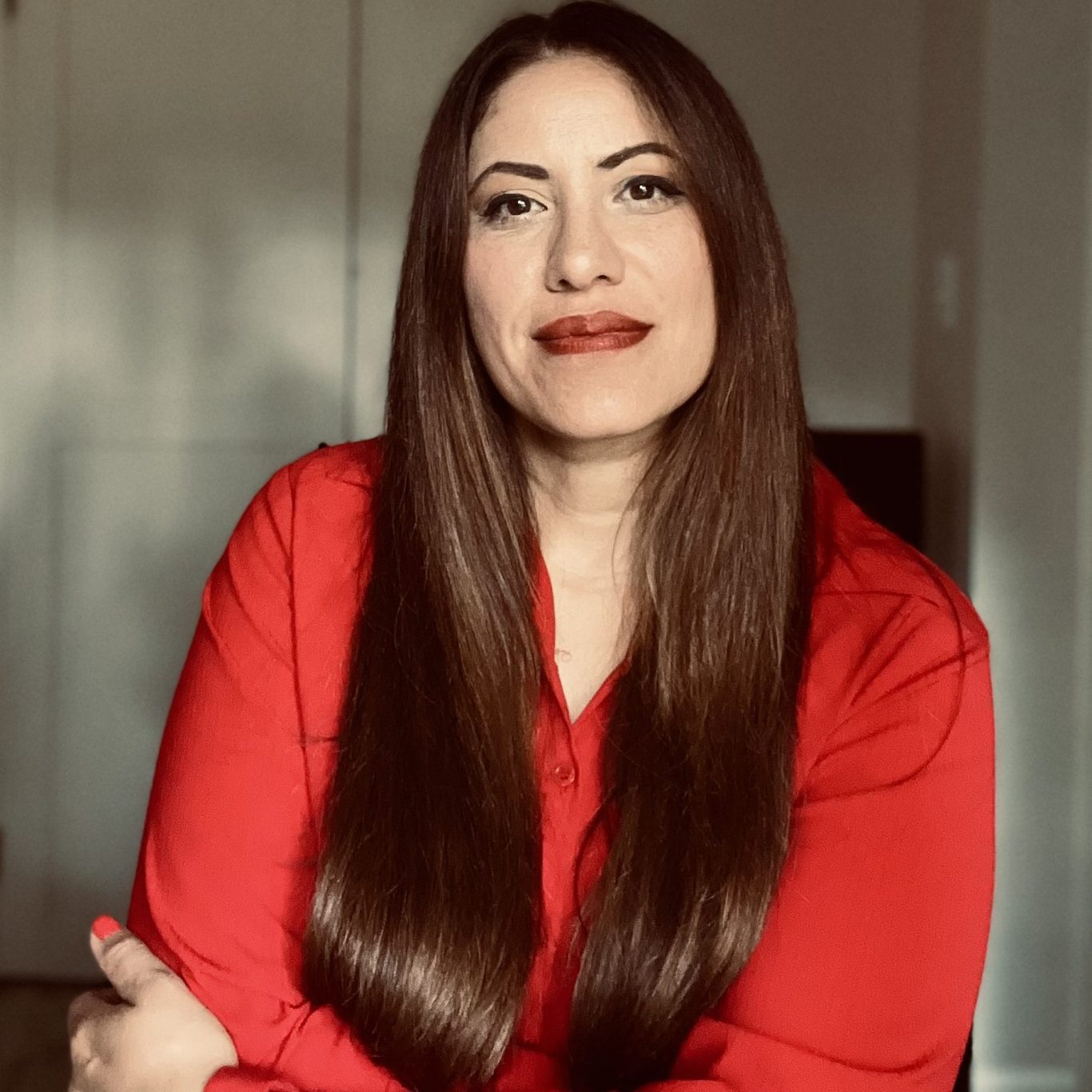
Hi, my name is Anna Alderete, and I am excited to share my first e-portfolio with you.

WHO I AM
As an experienced community college student, I have a deep passion for achieving success. My extensive experience as an international student enables me to improve my communication skills.
It gives me great pleasure to observe how my writing skills help me not only achieve my goals but also realize my true potential.
Academic Writing ENGL 101-30446
Dr. Atkins
This English course focuses on developing critical thinking, reading, and writing skills. Students move from writing based on personal experience to producing more formal academic work. They improve their grammar, including usage, mechanics, and punctuation. Writing assignments address different audiences and purposes and use a range of rhetorical strategies. Students also write responses to assigned readings and learn the basics of standard documentation formats. By the end of the course, students must submit a final portfolio that fulfills departmental requirements.
Essay 1
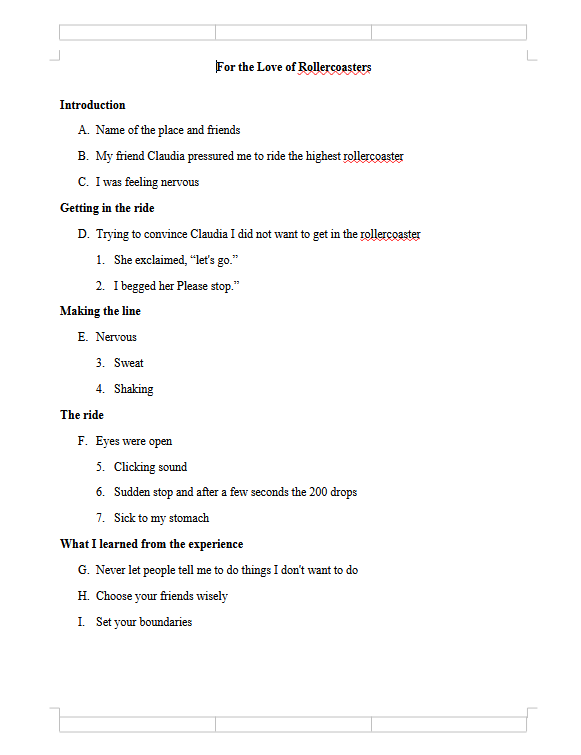
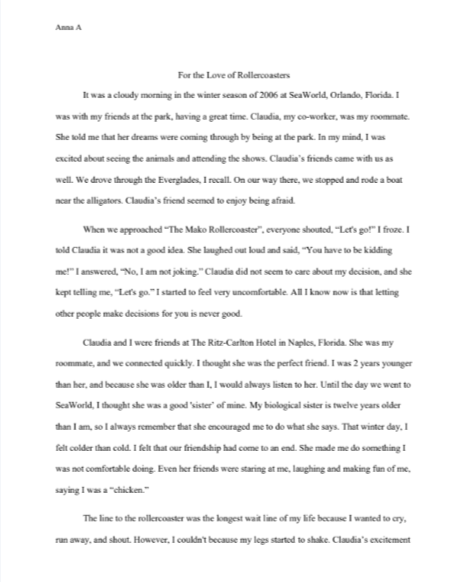
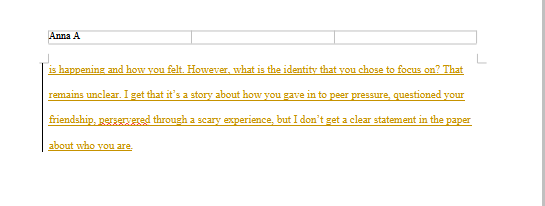
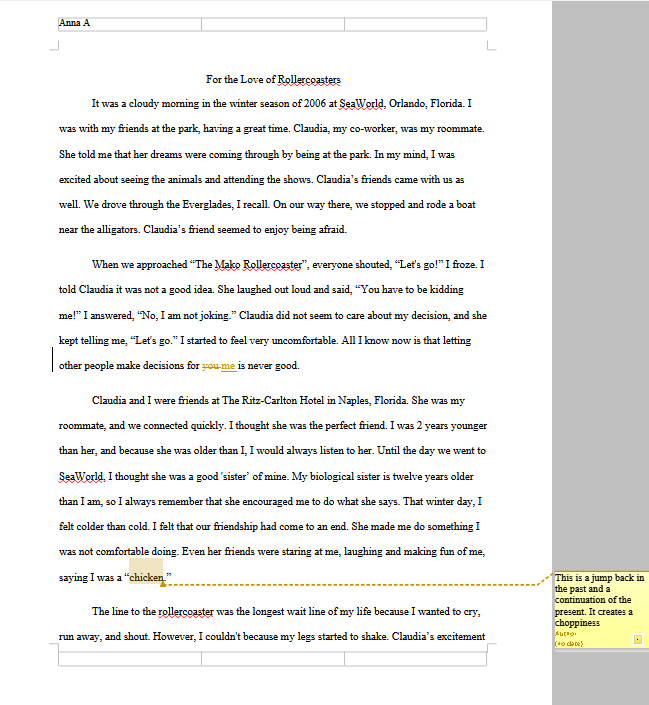
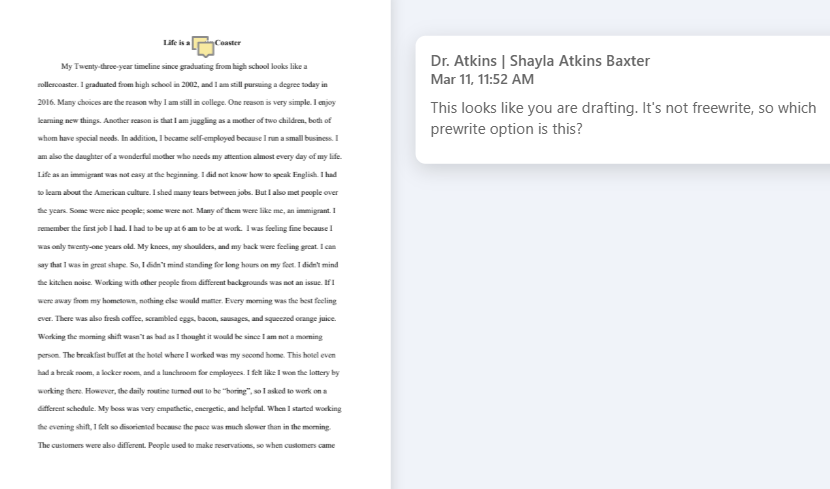
This is a single story in which one aspect of my identity shaped an important or memorable experience. My conclusion explains what I realized from that experience and how it influenced my understanding of myself, whether in relation to that specific identity or to my overall sense of who I am. Because this is a narrative essay, I included the essential elements of storytelling: exposition, conflict, climax, resolution, characters, and dialogue.
Title:
For the Love of Rollercoasters
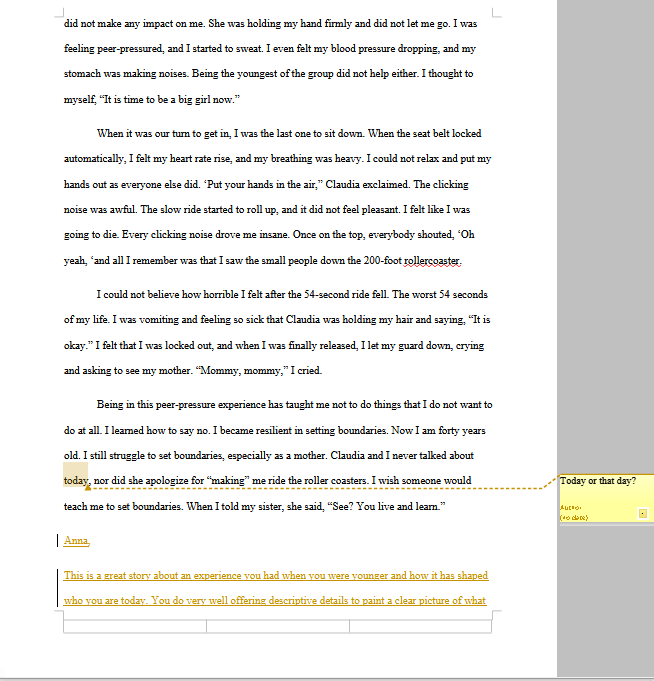
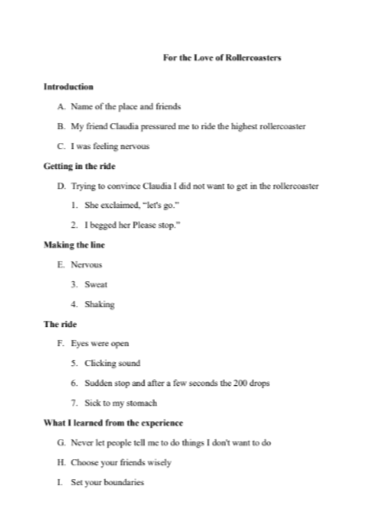
It was a cloudy morning in the winter season of 2006 at SeaWorld, Orlando, Florida. I
was with my friends at the park, having a great time. Claudia, my co-worker, was my roommate.
She told me that her dreams were coming through by being at the park. In my mind, I was
excited about seeing the animals and attending the shows. Claudia’s friends came with us as
well. We drove through the Everglades, I recall. On our way there, we stopped and rode a boat
near the alligators. Claudia’s friend seemed to enjoy being afraid.
When we approached “The Mako Rollercoaster”, everyone shouted, “Let's go!” I froze. I
told Claudia it was not a good idea. She laughed out loud and said, “You have to be kidding
me!” I answered, “No, I am not joking.” Claudia did not seem to care about my decision, and she
kept telling me, “Let's go.” I started to feel very uncomfortable. All I know now is that letting
other people make decisions for you is never good.
Claudia and I were friends at The Ritz-Carlton Hotel in Naples, Florida. She was my
roommate, and we connected quickly. I thought she was the perfect friend. I was 2 years younger
than her, and because she was older than I, I would always listen to her. Until the day we went to
SeaWorld, I thought she was a good 'sister’ of mine. My biological sister is twelve years older
than I am, so I always remember that she encouraged me to do what she says. That winter day, I
felt colder than cold. I felt that our friendship had come to an end. She made me do something I
was not comfortable doing. Even her friends were staring at me, laughing and making fun of me,
saying I was a “chicken.”
The line to the rollercoaster was the longest wait line of my life because I wanted to cry,
run away, and shout. However, I couldn't because my legs started to shake. Claudia’s excitement
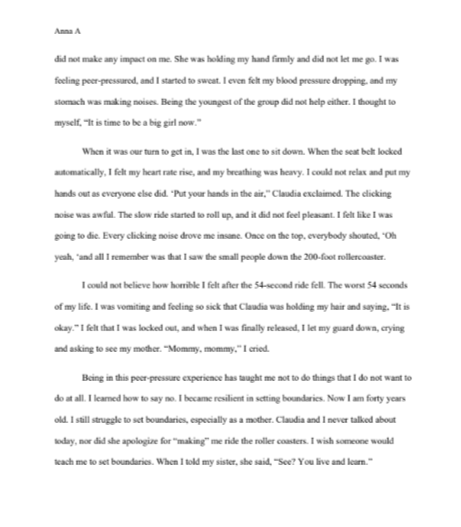
Anna A
did not make any impact on me. She was holding my hand firmly and did not let me go. I was
feeling peer-pressured, and I started to sweat. I even felt my blood pressure dropping, and my
stomach was making noises. Being the youngest of the group did not help either. I thought to
myself, “It is time to be a big girl now.”
When it was our turn to get in, I was the last one to sit down. When the seat belt locked
automatically, I felt my heart rate rise, and my breathing was heavy. I could not relax and put my
hands out as everyone else did. ‘Put your hands in the air,” Claudia exclaimed. The clicking
noise was awful. The slow ride started to roll up, and it did not feel pleasant. I felt like I was
going to die. Every clicking noise drove me insane. Once on the top, everybody shouted, ‘Oh
yeah, ‘and all I remember was that I saw the small people down the 200-foot rollercoaster.
I could not believe how horrible I felt after the 54-second ride fell. The worst 54 seconds
of my life. I was vomiting and feeling so sick that Claudia was holding my hair and saying, “It is
okay.” I felt that I was locked out, and when I was finally released, I let my guard down, crying
and asking to see my mother. “Mommy, mommy,” I cried.
Being in this peer-pressure experience has taught me not to do things that I do not want to
do at all. I learned how to say no. I became resilient in setting boundaries. Now I am forty years
old. I still struggle to set boundaries, especially as a mother. Claudia and I never talked about
today, nor did she apologize for “making” me ride the roller coasters. I wish someone would
teach me to set boundaries. When I told my sister, she said, “See? You live and learn.
Essay 2
I chose compare-contrast; I was only able to use two sources. Information I add in your paper verifiable through the work, not other sources you found
Title: The Cost of Survival
Some people say survival is essential to live and tell. Some other people say that survival
is traumatizing. Everyone has a story to share, but not everyone wants to remember how they
survived a crisis. For example, someone decides to migrate to a different country. Then, this
person finds out that the culture in the new place is completely different. Most people experience
cultural shock, homesickness, and loneliness. The short film Silent Beats, written by Jon M Chu
(1), explores themes of stereotyping, first impressions, and perceptions. This short film contrasts
the Asian men, the elderly white women, and the young African Americans’ behavior in only
five minutes, which made it very interesting.
The Asian man never suspected the old white lady would have stolen from him, but he
did suspect the black gentleman was going to rob him at gunpoint. Based on race, the Asian man
never smiled at the young gentleman he was shopping alone at the convenience store. The old
woman was also not smiling at the young gentleman and did not even thank him for picking up
something she dropped on the floor. The young gentleman was also judging the Asian clerk as
“an immigrant who likes to take pictures”. In addition, the young African American was
stereotyping the old lady as “she is old, plays cards, and will die soon.”
Another contrast the author highlighted in the film was the age of the lady and the
gentleman. The clerk assumed that he was going to be in trouble as soon as he saw the African
American is getting into the store. As soon as the Asian man saw him coming into the store, he
looked nervous, anxious, and prepared to call the police. Usually, people judge that young people
are naive and rebellious. This is an example of stereotyping that the author showed in his work.
Living in a society where there is such immense diversity makes the community look
vulnerable, susceptible, and treated unfairly. Most immigrants came to the USA to find a better
future, and it is unfortunate to find out about segregation, discrimination, and hate against race,
age, and ethnicity. The short film was made in 2001, which means disparities have changed over
the years. More immigrants came to the country and found out that they were experiencing
culture shock, feeling alone, and being discriminated against based on their appearance. The
short film reveals these themes with concrete examples at a convenience store.
Essay 3
I wrote a 3- to 5-page argumentative essay that clearly identifies your position on that problem for my readers. I identified a problem that affects a community and explained why the issue is crucial to the reader.
Titulo:
Multilingualism: A Strength, not a Weakness
Speaking more than one language should be considered a strength, yet many multilingual students
They are treated as though it is a weakness. In schools and communities across the country, multilingual
Students often face language barriers, stereotypes, and limited academic support. Some students
struggle to participate in class discussions or feel pressured to hide their native language to fit in
with others. These challenges can affect their confidence, education, and sense of belonging within
the community. However, multilingualism provides important cultural and communication skills
that benefit both schools and society as a whole. Although multilingual students contribute
important cultural and linguistic strengths to society, they often face discrimination and limited
support in schools, making better educational resources necessary.
One major problem multilingual student face is the lack of support in schools. Many students who
speak another language at home struggle to fully understand lessons, assignments, or classroom
discussions because schools often do not provide enough language resources or assistance. As a
result, these students may fall behind academically even when they are intelligent and hardworking.
In some cases, multilingual students also experience embarrassment or anxiety when speaking in
class because they fear being judged for their accents or grammar mistakes. This can lower their
confidence and make them feel isolated from their classmates. Without proper support, students
may begin to believe that their native language is a disadvantage instead of an important part of
their identity. Schools should recognize that multilingual students bring valuable perspectives and
skills to the classroom and deserve equal opportunities to succeed academically and socially.
Multilingualism also benefits schools and communities in many important ways. People
who speak more than one language are often able to communicate with different groups of people
and help create stronger connections between cultures. In the article “Skills of Cognitive
Flexibility in Monolingual and Bilingual Younger Adults,” the article reads about how these
results suggest that bilingualism improves cognitive flexibility, though it does not significantly
affect sustained attention, and that regularly managing and switching between languages plays a
key role in cognitive development. Learning and speaking multiple languages can improve
problem-solving skills, memory, and communication abilities. Despite these advantages,
multilingual students are sometimes treated unfairly or pressured to stop using their native
language in order to fit in. This not only harms students emotionally, but it can also cause
communities to lose valuable cultural traditions and perspectives. Instead of discouraging
multilingualism, schools and communities should celebrate language diversity and encourage
students to take pride in their cultural identities. In diverse communities, multilingual individuals
can assist families, translate information, and improve understanding between people from
different backgrounds.
Studies show that speaking multiple languages can improve communication skills, memory,
and critical thinking abilities. Schools and communities can take several steps to better support
multilingual students and create more inclusive environments. One important solution is providing
stronger language assistance programs, such as bilingual tutors, translation services, and English
language learning resources. Teachers can also encourage students to participate in class without
fear of being judged for their accents or language differences. In addition, schools should celebrate
cultural diversity through events, clubs, and activities that allow students to share their languages
and traditions with others. These efforts can help multilingual students feel respected, confident,
and included in their communities. In the article “Ed. Dept. Moves to Shutter Its Office for English
Learners”, by Ileana Najarro, talks about the shuttering of the office of English acquisition, also
known as OLEA. The Department of Education notified key members of Congress that it intended
to eliminate the office and transfer OELA’s programs and responsibilities to other departments,
removing the need for OELA to operate as an independent office. In addition, the article reads
about how experts in English learner education and advocacy groups are concerned that
eliminating OELA could reduce the quality of guidance, support, and resources provided to states
and schools that serve English learners. When schools support language diversity, all students
benefit by learning to appreciate different cultures and perspectives. Creating inclusive
environments not only improves education for multilingual students but also strengthens the
community as a whole.
In conclusion, multilingual students face many challenges in schools and communities,
including language barriers, discrimination, and limited academic support. Despite these
difficulties, multilingualism provides important benefits such as stronger communication skills,
cultural diversity, and greater understanding between people from different backgrounds. Schools
and communities should recognize that speaking multiple languages is a strength rather than a
weakness. By providing better educational resources and creating more inclusive environments,
schools can help multilingual students feel supported and successful. When communities value
and encourage multilingualism, everyone benefits from a more connected, respectful, and diverse
society.
Essay 4
Reflective Essay
The areas I struggled with most were organization and sentence clarity. In several of my
early essays, my ideas were not always arranged logically, which made some paragraphs feel
disconnected from my thesis. I also struggled with writing concise academic sentences because I
sometimes included unnecessary repetition or unclear wording. Another challenge was balancing
analysis with summary, especially in essays that required critical thinking and interpretation of
sources. Another area I still need to improve is developing deeper analytical responses to
readings and outside sources. At times, I relied too heavily on summary instead of fully
explaining how the ideas connected to my own argument. Future writing courses will require
stronger critical analysis and more independent interpretation of sources. Although I made
progress in developing stronger thesis-driven essays and incorporating feedback during revision,
I still struggle with organization, sentence clarity, and deeper analytical writing. My earlier
essays often contained disconnected ideas, repetitive wording, and excessive summary, which
showed me the importance of logical structure and critical analysis in college-level writing.
One area where I experienced the most difficulty this semester was organization and
sentence clarity in my essays. In several of my earlier assignments, my body paragraphs did not
always connect clearly to my thesis, which caused some ideas to appear disorganized or
underdeveloped. I often struggled to arrange my points logically, making it difficult for my
essays to flow smoothly from one paragraph to the next. In addition, I found it challenging to
write concise academic sentences because I sometimes repeated ideas or used unclear wording
that weakened my analysis. Another major challenge involved balancing summary with critical
analysis when responding to readings and outside sources. Instead of fully explaining how the
evidence supported my argument, I occasionally relied too heavily on summarizing the material.
However, through revision and instructor feedback, I began to recognize the importance of
organization, sentence clarity, and deeper analytical thinking in college-level writing. Although I
made progress in developing stronger thesis-driven essays and revising my work more
effectively, I understand that I still need to continue improving these skills for future writing
courses.
One of the areas where I made the most dramatic progress was developing stronger
thesis-driven essays and learning how to incorporate feedback during the revision process. At the
beginning of the semester, my thesis statements were often too broad and did not clearly guide
the direction of my essays. As a result, some of my body paragraphs lacked focus and connection
to my main argument. However, after receiving feedback from my instructor and peers, I learned
how to create more specific and analytical thesis statements that improved the overall
organization of my writing. Revising my essays also helped me recognize the importance of
rewriting and reevaluating my ideas instead of submitting a first draft without changes. Through
multiple drafts, peer reviews, and instructor comments, I became more aware of my weaknesses
and learned how to strengthen my arguments with clearer explanations and stronger supporting
evidence. This progress helped me become a more thoughtful and organized writer, and it
showed me that effective writing is a process that requires patience, revision, and critical
reflection.
Another area where I showed growth this semester was my ability to integrate evidence
and respond more effectively to readings and outside sources. In earlier essays, I often included
quotations or paraphrased information without fully explaining how the evidence supported my
argument. This made some of my analysis feel incomplete or overly focused on summary rather
than interpretation. However, as the semester progressed, I became more intentional about
connecting evidence to my thesis and explaining its significance within my paragraphs.
Feedback from my instructor helped me understand that simply including sources is not enough;
I needed to analyze and interpret them in order to strengthen my argument. I also improved in
selecting more relevant evidence and placing it more effectively within my essays to support my
main ideas. Although I still need to continue developing deeper critical analysis skills, I have
made clear progress in learning how to engage with sources in a more thoughtful and academic
way.
In conclusion, my writing throughout this semester reflects meaningful growth in several
key areas, particularly in developing stronger thesis statements, incorporating feedback during
revision, and improving my use of evidence. Through multiple drafts and instructor guidance, I
learned that effective writing is a recursive process that requires planning, revising, and critical
reflection rather than relying on a single draft. At the same time, my portfolio also highlights
ongoing challenges with organization, sentence clarity, and deeper analytical thinking, which I
will continue to address in future writing courses. As I move forward into courses such as ENGL
102 and other college-level classes that require writing, I will apply the skills I have developed in
revision, source integration, and thesis development while also focusing on strengthening my
ability to write with greater clarity and depth. Overall, this course has helped me understand that
strong academic writing is built through continuous improvement and careful attention to both
strengths and areas for growth.
Essay 1
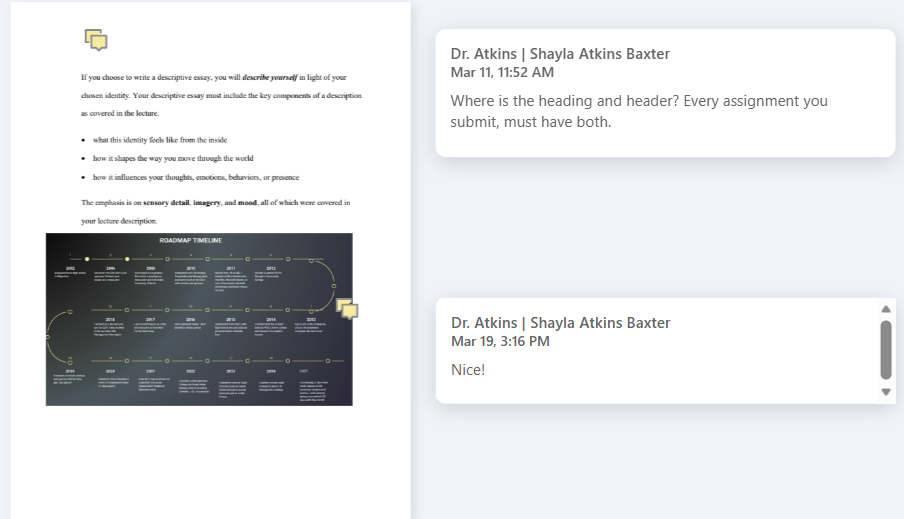
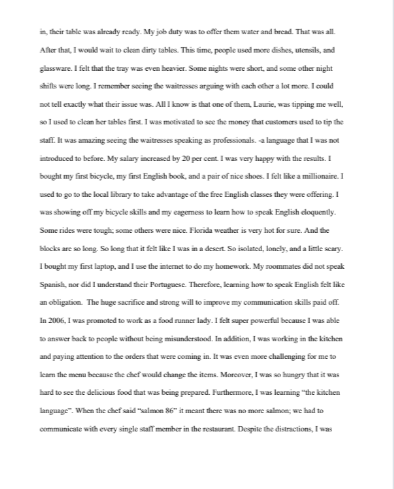
I have to choose one of the three writing options: exemplification, narrative, or descriptive. I chose the narrative option and told a story using the elements of narration which are: exposition, conflict, climax, resolution, characters,and dialog.
For this essay, I used freewriting to start organizing my ideas. I learned that there are many other ways to start a draft.
Essay 2
I chose to write a comparison and contrast essay in which I evaluate the points of similarity and difference between the assigned work’s usage of a concept and my selected work. I chose a Silent Beats by Jon M Chu short film to compare and contrast inequalities within society.
For this essay, I worked with a tutor because I didn't know which subject to choose from Jon M. Chu's short video, as there were many topics to talk about. Luckily, my tutor was very helpful.
Essay 3
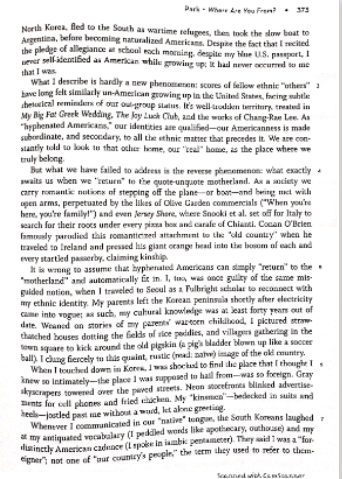
For this essay, I had to choose one of three topics: issues in art, the self and the global issue, or community reads. I chose community reads, and I enjoyed writing about multilingualism. I also needed a tutor who helped me to write this specific type of essay since I also had to learn how to use MLA and cite in-text.
I spent more time researching this topic because I needed data to support my statements. As I was investigating, I found it very interesting to use the book "Rules for writers" because it explained in details how to use MLA and also it explains with examples many of the common mistakes we practice in class; run-ons and fracgments, and punctuation.
Essay 4
Self-reflections and self-reviews.
I think this was the most difficult essay to write because I have many areas of my writing to work on. Using tutors from the tutoring centers was very helpful. I am glad I learned in this class what it takes to write academic essays at a college level.